Understanding Hypoxia: Adaptation vs. Acclimation in High-Altitude Birds
We investigate how organisms survive and thrive under severe environmental challenges, specifically focusing on the physiological and genetic mechanisms of hypoxia tolerance in high-altitude avian species.
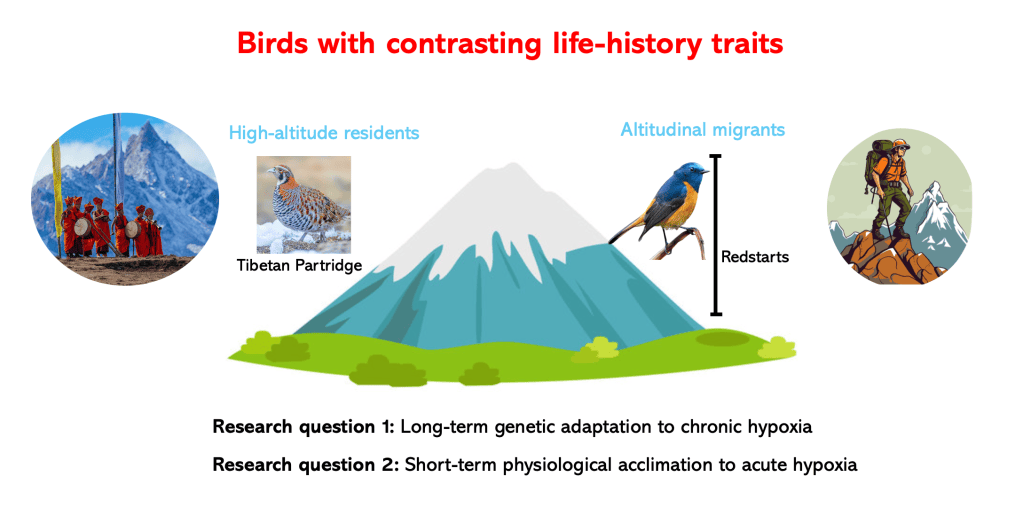
By studying birds with contrasting life-history traits, we aim to decouple the evolutionary mechanisms of long-term survival from the flexible strategies of seasonal movement. Our research is centered around two core model groups in the Sino-Himalayan landscapes:
- High-Altitude Residents (e.g., Tibetan Partridge): Species that live year-round in extreme, low-oxygen environments.
- Altitudinal Migrants (e.g., Redstarts): Species that dynamically transition between low and high altitudes throughout the year.
Popular Press News about this project
- New Study Reveals How High-Altitude Birds Adapt to Life on the ‘Roof of the World’.
- Kent State biologists build a genomic roadmap to study how birds adapt to thin mountain air
- Inside the genome of the mountaineer bird: Black Redstart and the secrets written in its DNA
- New Research Initiative Aims to Unravel Genetic Adaptations to High Altitude Hypoxia
Sino-Himalayan Small Mammal Conservation & Population Genomics
We utilize population genomics approaches to study endangered small mammals, focusing on climate-sensitive species like pikas (Ochona spp.) across the Sino-Himalayas. By looking closely at genomic variations, we investigate how geographic barriers, habitat fragmentation, and climate shifts affect vulnerable alpine ecosystems.

Popular Press News about this project
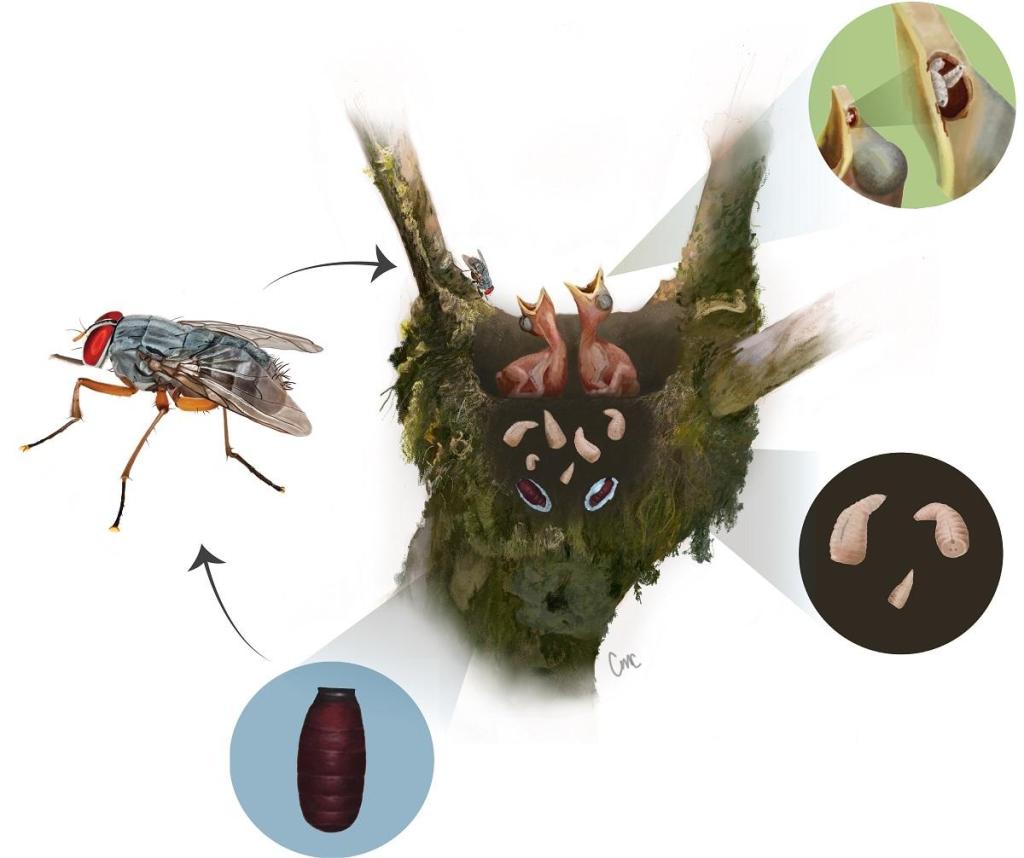
Decoding the Avian Vampire Fly Invasion in the Galápagos Islands
Our research bridges evolutionary genomics, population genetics, and conservation biology. Using the avian vampire fly—a destructive parasite decimating endemic landbirds in the Galápagos Islands—as a primary model, we analyze how invasive populations adapt at a molecular level. By comparing island invaders with native mainland populations, we map the genetic signatures of rapid natural selection, track interconnected gene flow across isolated regions, and identify climate-driven genetic variations.
Popular Press News about this project
Genomics of Global Invasions: Tracking the Box Tree Moth
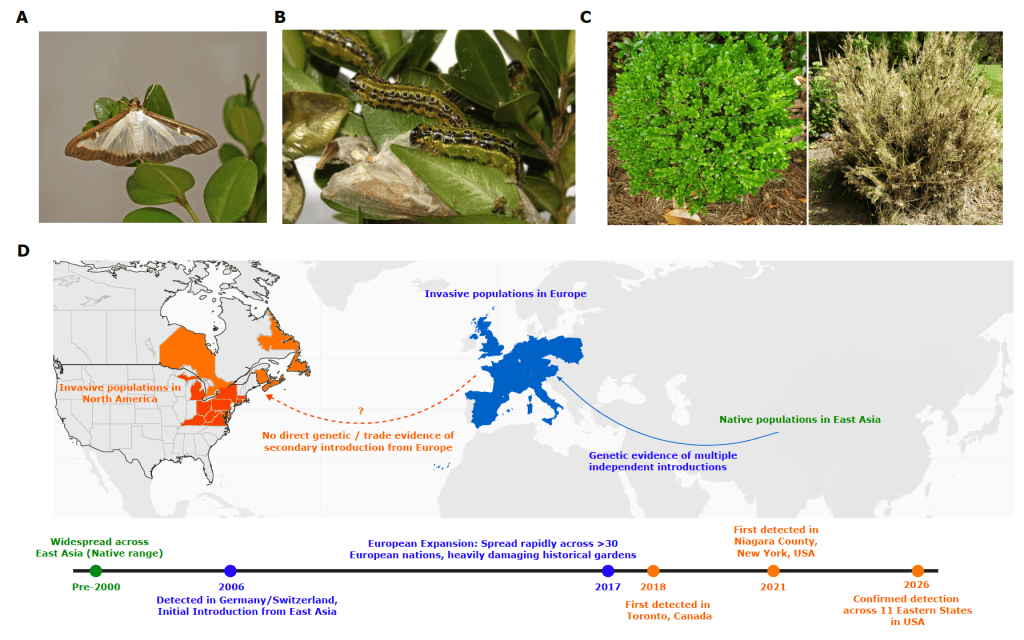
We combine high-resolution genomics, and morphological analysis to reconstruct the invasion history of the highly destructive box tree moth (Cydalima perspectalis) across North America. Native to East Asia, this invasive pest has inflicted heavy damage on historical European gardens and has rapidly spread across the eastern United States. By detailing the unique genomic signatures and mapping how these populations partition across regions, our lab delivers the targeted data necessary to optimize state-and federal-level surveillance and draft containment protocols of this invasive pest.
Popular Press News about this project

